

“It’s important that people get their eyes tested. And it’s really important to get that OCT (Optical Coherence Tomography) scan that is offered because that scan saved my life.”
Elaine O’Callaghan, from Cork, had never heard of eye cancer or ocular melanoma before she went in for a routine eye examination in 2018.
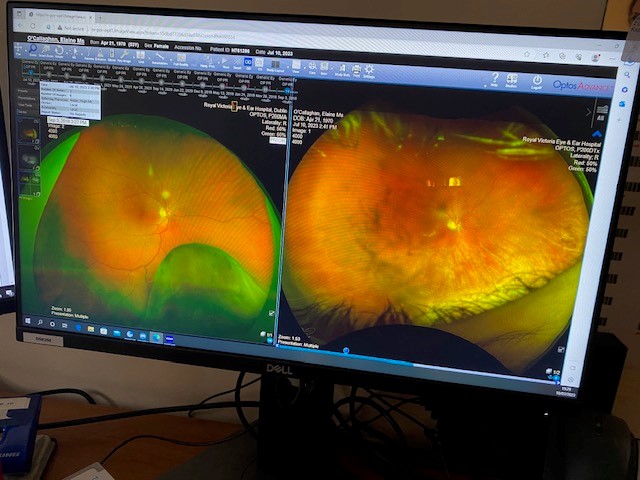
During her examination in Portlaoise, her optician asked if she had any other symptoms. Elaine had previously noticed a ‘flicking’ or ‘flashes’ in the side of her eye, in addition to some headaches that she would have otherwise not considered as a symptom. Her optician then conducted an OCT scan which consists of dilating the eye and gives images of the layers at the back of the eye and retina. She was referred to more tests to be conducted in Waterford the following day.
The doctor told her they would order her for an MRI scan, as the worst-case scenario would be a tumour.
“It should’ve shown alarm bells, but I never panicked as it went in over my head,” Elaine says. She went to Whitfield Clinic in Waterford the next day. “They went straight in, and they started doing all these tests, including blood tests and an MRI. It was very efficient.”
One of the doctors conducting the tests told Elaine that she had a detached retina, which could have been caused from a fall or a bang in the head. Although in her case, there was something else there. The doctor told her they would order her for an MRI scan, as the worst-case scenario would be a tumour.
Elaine rang her sister Olivia, who is a nurse, because she wasn’t sure the gravity of what the result of the MRI scan might be. Oliva met her in Waterford, and they were told on a Friday afternoon that Elaine had ocular melanoma, or eye cancer. As it was before the weekend, there wasn’t a concrete plan put in place for Elaine as she needed to be referred to the only consultant that dealt with this diagnosis in the Royal Victoria Eye and Ear in Dublin.
“When you’re told that, it’s an awful experience and something you’ll never forget,” Elaine says. “Your mind goes into overdrive, so you don’t even think of ringing someone, like the Irish Cancer Society, to talk to. It was extremely lonely.
She decided to have the treatment in Ireland, with the support of friends and family
“I was left in total limbo. When you do look up Google, it’s horrendous what you read.”
Elaine was officially diagnosed in September 2018 when she was 48 and referred for treatment by Dr. Horgan in the Eye and Ear Clinic in Dublin. She had the option to complete her treatment in Liverpool or wait another month due to a revamp for the theatres in the St. Lukes hospital Dublin. She decided to have the treatment in Ireland, beginning in October, because she needed her friends, work colleagues and family around her to support her.
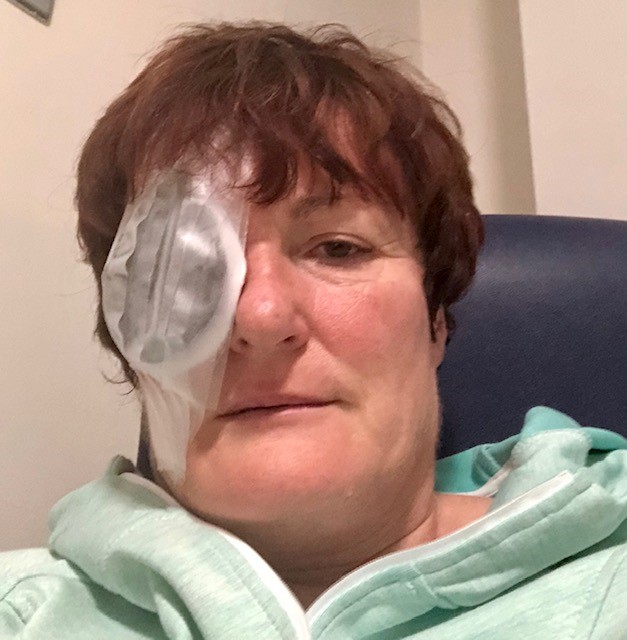
Her treatment didn’t require chemotherapy. Instead, she would have brachytherapy – with radioactive seeds stitched onto the tumour to deliver a high dosage of radiation for ten days.
While undergoing her treatment, Elaine was in the company of three other patients, who also had ocular melanoma. The group called themselves ‘Patches’, for the eye patches they wore. The four of them were radioactive for the ten days at the time of treatment, so they were unable to see their friends and family and developed a close and unique bond with each other.
“When I tried to explain to people the friendship we have, I can’t, because the four of us helped each other, in many ways by just being there,” Elaine says.
“Somebody might have a question - oh, what do you feel? Do you think this is okay? What should I do? There was so much help that we were able to give to each other by just supporting each other.”
It was only when Elaine returned to work that she got connected with the Irish Cancer Society,
Ocular melanoma patients have a 50 per cent chance of the cancer spreading to the liver. If that happens, then the patient’s survival outcomes can vary, and with medical advancements the lifespan has being prolonged for this deadly disease. In Elaine’s Patches group, two of the four women’s cancer spread to their liver. “It’s not a statistic I like to talk about, but it just shows it’s there,” she says.
“You live with the feeling of not knowing if this disease will spread, but to see two of your friends succumb to this disease is heartbreaking. Rest In Peace to both ladies, they will never be forgotten by us.”
Elaine had started treatment in October, then went back to work in February the following year. “I wanted normality. When I did get back to work, a counsellor said, ‘the person who left that day is not the same as the person who returned’. And they were right. Everything overwhelmed me.”
It was only when Elaine returned to work that she got connected with the Irish Cancer Society, when her return-to-work policy signposted her to the organisation.
Elaine's advice to for anyone diagnosed with cancer
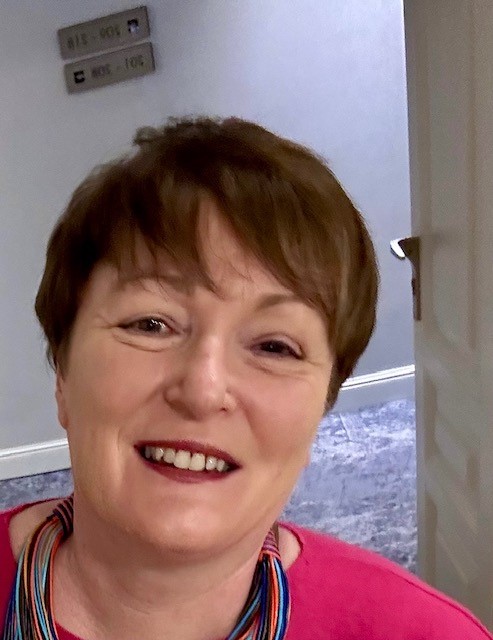
Seven years after her diagnosis, Elaine has little to no vision in her right eye. “I’ll take the loss of sight for the loss of my life,” she says.

Want to get involved in Daffodil Day this year? Join us on March 28, and go all in against cancer! Click the button below to find out all the ways you can take part in Daffodil Day this year!

