

“I’ve been very lucky that part of the chemo was a bit of a blur – it was a rocky rollercoaster of a ride. But I genuinely never take life for granted. I really appreciate being alive and well, just getting up and getting going.”
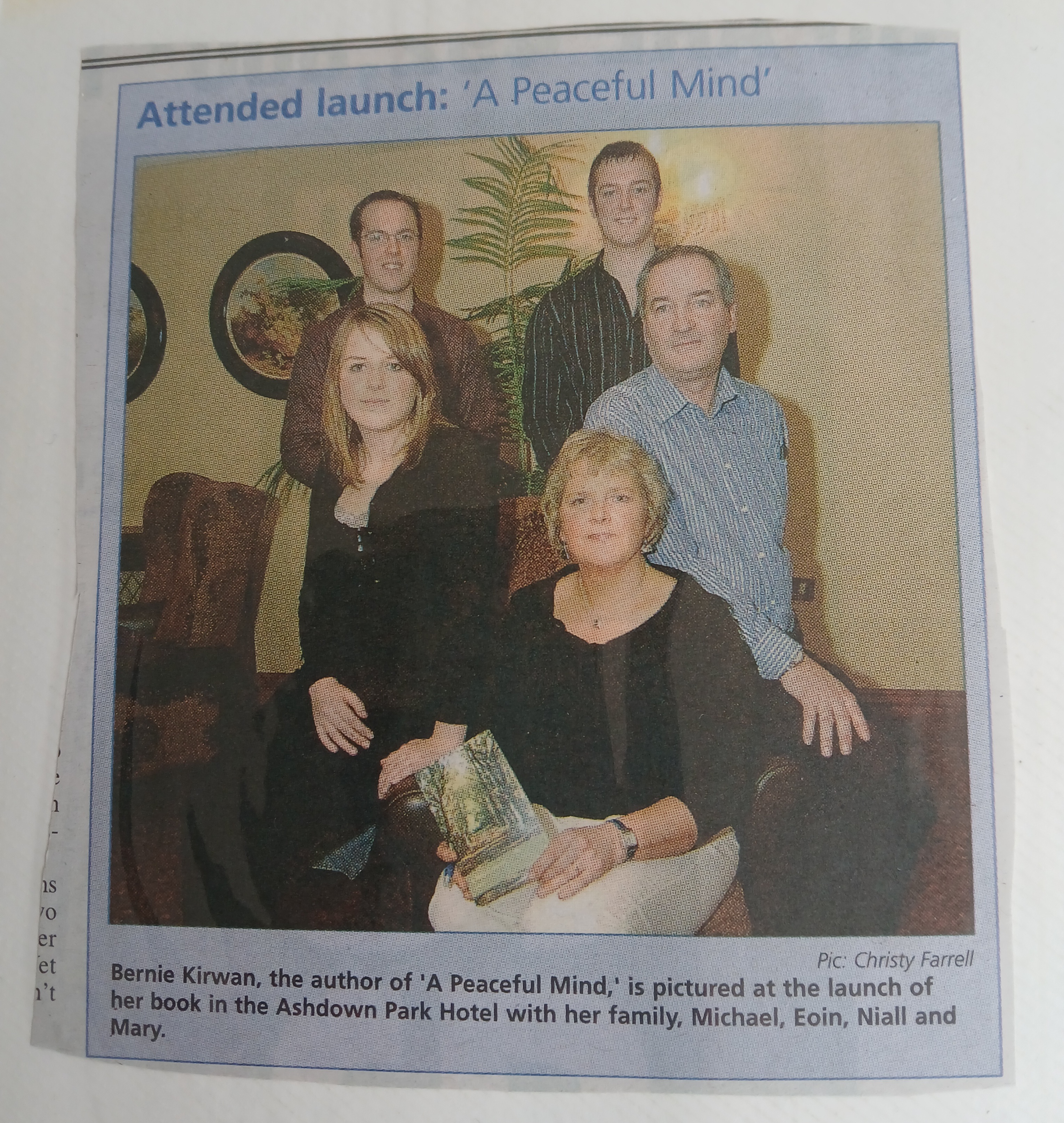
Twenty-five years ago, Bernie Kirwan, now 66 years old, discovered a lump in her breast a week before she and her family were meant to go to France on holiday. Bernie, a now-retired nurse who lives in Gorey, Wexford, went to her GP the next morning after finding the lump.
Her GP sent her to a surgeon in Wexford to do a biopsy as she had planned to leave the country, and they found that the mass was malignant. They cancelled their holiday and Bernie went into hospital.
She had an aggressive stage 3 invasive lump in her breast, and Bernie was faced with the need for treatment.
“Within a week of finding my lump, I had my mastectomy,” says Bernie, “which was unbelievable when you think about it. I didn’t care; I said you could take the two of them if you wanted.
“I didn’t even process it. I just wanted to get in and get it off and get it out.”
Before coming home from the hospital, Bernie saw an oncologist, Dr Seamus O’Reilly, who offered Bernie the chance to take part in a clinical trial. In the randomised trial, a chemotherapy drug previously used for a different type of cancer would be randomly administered to patients, which was being tested for use in breast cancer.
“I was willing to take anything,” she adds. “Instead of six sessions of chemo, I had nine.”
Bernie completed nine rounds of chemotherapy as part of the clinical trial. Her chemo lasted from August 2000 through February 2001.
“Within a week of finding my lump, I had my mastectomy,” says Bernie, “which was unbelievable when you think about it. I didn’t care"
“It was tough, very tough,” she says. “But sure, I got through it.”
About seven years after her mastectomy, Bernie got a reconstructive surgery to have an implant put in, more out of convenience, in part because she swam a lot.
Bernie also went through menopause early due to the medication. She ultimately had a hysterectomy due to having ovulation starting again after she had experienced menopause.
“I just got on with living as best I could and recovered slowly and took my time and I didn’t go back to work for quite a while. I thought I would, but I didn’t.
“At the time,” she adds, “In my deepest darkest thoughts, I thought I was done for.
“I knew I needed more than just the chemo thrown at me, I knew I needed emotional support. I rang the Irish Cancer Society Support line. All my friends and my family were really good, but I just needed to talk to a stranger.
“The Cancer Nurse on the Support Line was absolutely fantastic, and it was the first time I picked up the phone, and I was roaring crying into the phone. It was lovely to talk to somebody who helped me realise what I was going through was perfectly normal.
“Thank god I survived,” she says. “It is that self-talk and self-belief, a daily reminder that you have a lot to be grateful for.”
After I stopped playing sport, I gained a lot of weight and it took me a while to get comfortable going the gym but now I have a that focus and I’m much healthier and fitter. It is of course, hugely challenging but I think looking after your physical and mental health can really help you stay positive and help with your recovery. I want any young person reading this to know it does get better and you just need to take it step by step.”
“Thank god I survived,” she says. “It is that self-talk and self-belief, a daily reminder that you have a lot to be grateful for.”
Bernie started journaling and looking into meditation and yoga during and after her treatment. “I was really learning, navigating my way through what happened to me,” she says. “The emotions don’t change. They’re as relevant now as they were then.”
She was further encouraged by her oncologist, Dr Paula Calvert, to self-publish a book in 2007 titled A Peaceful Mind.
The book, half memoir and half guide, chronicled her cancer journey and shared the practices that supported her recovery.
Part of her motivation for writing and publishing her book was to remind others with cancer that they are not alone.
“I had a hunger to talk to somebody my age at the time who was diagnosed. I had such a hunger to meet somebody who had come through it and survived. There’s a huge thing in you where you can think, she survived, so hopefully there’s hope for me as well.”
Today, twenty-five years on from her diagnosis, Bernie is cancer-free.
“I spent my time thinking will I be here for this; will I be here for that,” Bernie says. “All we have is today.”
Bernie says if she could give advice to those experiencing a new diagnosis or treatment, it would be that they should take it “day by day”.
“Don’t listen to people. People are unbelievable when you’re diagnosed, they come at you with every kind of quackery and diet, and you have enough to do,” she says. “So be very careful who you expose yourself to and talk to.
“Put your head down, get the right advice, go to the right organisations, go to the Irish Cancer Society.
“People would tell me to be positive and be great. Everybody is different. Your thoughts are everything. Being positive isn’t about putting a smile on your face, it’s about being honest. It’s okay to have bad days too.”

Want to get involved in Daffodil Day this year? Join us on March 20, and go all in against cancer! Click the button below to find out all the ways you can take part in Daffodil Day this year!

